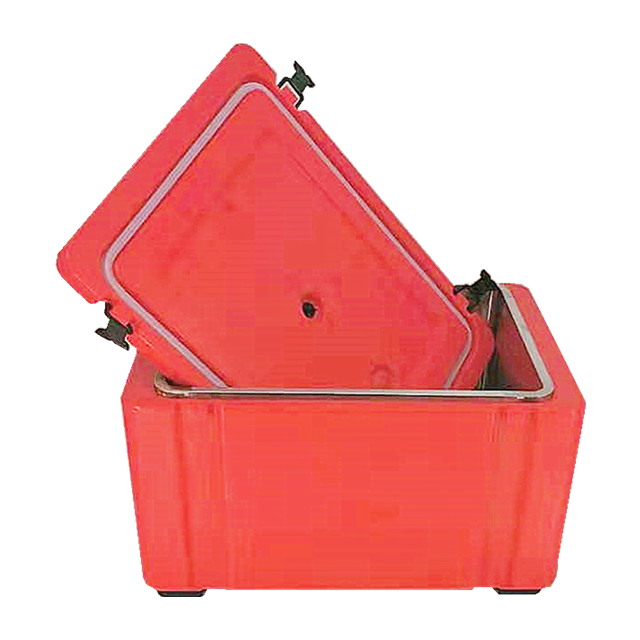
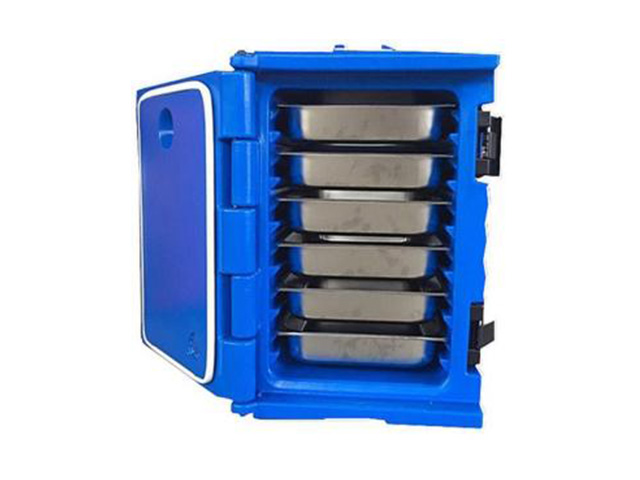
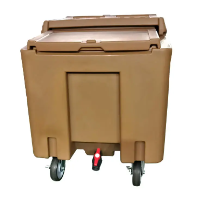
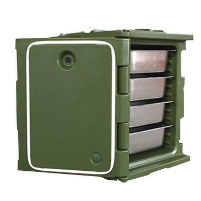
Plastic food pan carriers are essential tools for transporting and storing food in commercial kitchens, catering businesses, and other foodservice operations. However, not all plastic food pan carriers are created equal. To maximize their functionality and ensure their durability, it's important to pay attention to their design, testing, and selection.
Designing Plastic Food Pan Carriers for Optimal Functionality
When designing plastic food pan carriers, manufacturers need to consider several factors that impact their functionality. For example, they need to take into account the size and shape of the pans they will hold, as well as the weight of the food they will transport. They also need to consider the ergonomics of the carrier, ensuring that it is easy to handle and maneuver, even when fully loaded.
One way to improve the functionality of plastic food pan carriers is to include features such as non-slip surfaces or handles, which can improve grip and reduce the risk of dropping or spilling food. Additionally, carriers can be designed with insulation to maintain the temperature of hot or cold foods during transport.
Additionally, insulation is a crucial component of any food pan carrier. Proper insulation helps maintain consistent temperatures and ensures that food stays at safe temperatures during transport.
Testing Plastic Food Pan Carriers for Durability
To test plastic food pan carriers for durability, you can subject them to various stress tests such as dropping them from a height, applying pressure, and exposing them to extreme temperatures. You can also simulate real-life conditions by filling them with heavy objects and transporting them over rough surfaces. After each test, inspect the carriers for any cracks or damage. Repeat the tests multiple times to ensure consistent results. Finally, compare the results of different brands or types of plastic carriers to determine which one is the most durable.
Before bringing plastic food pan carriers to market, they should undergo rigorous testing to ensure their durability and effectiveness. Tests should include simulations of real-world scenarios, such as bumps and drops, as well as inspections of key components like hinges and latches.
It's also important to test the carrier's insulation capabilities in various ambient temperatures to ensure that hot foods stay hot and cold foods stay cold throughout the transport process.Strength testing should also be performed to ensure that the carrier can withstand the weight of multiple food pans.
Selection
When selecting plastic food pan carriers, it's important to consider the specific needs of your business. Some factors to consider include the types of food being transported,when selecting a plastic food pan carrier, there are several factors to consider. These include the size and shape of the carrier, the number of food pans it can hold, whether it has insulation, and its overall quality and durability.
Factors such as size, capacity, and durability should all be taken into account. Additionally, it is important to choose carriers that are compatible with the types of food pans you use in your kitchen.
In conclusion, maximizing the functionality of plastic food pan carriers requires careful consideration of design, testing, and selection.